


Aquarium Microbiome Analysis
Discover the complete bacterial ecosystem in your aquarium with Aquarium Microbiome Test. Get detailed insights into the health and balance of your marine ecosystem.
Simple breakdown to categories
1. Microbial Diversity Gauge
Measures the overall richness of bacterial species in your aquarium. Higher diversity typically indicates a more stable, resilient ecosystem capable of handling stress and maintaining water quality. This metric serves as your tank's overall health score—diverse microbiomes resist disease, process nutrients efficiently, and create stable conditions for coral and fish.

Example of a tank with suboptimal microbial diversity
2. Rank-Abundance Curve
Visualizes the distribution of bacterial populations in your tank, showing which species dominate and which are rare. A healthy curve shows gradual decline rather than steep drops, indicating balanced competition without any single species overwhelming the system. This helps identify if your tank has good microbial balance or if problematic bacteria are dominating

Rank-abundance curve showing an unhealthy microbiome with imbalanced population
3. Top Microbial Families
Identifies the dominant bacterial families present in your aquarium. Understanding which families are thriving helps predict tank behavior. Some families excel at nutrient processing, others at biofilm formation, disease suppression or disease causers. This breakdown reveals whether your tank's bacterial community aligns with healthy reef systems or if intervention is needed to shift the balance.

Microbial families: healthy vs unhealthy (dominated by vibrionaceae)
4. Pathogens
Screens for harmful bacteria known to cause disease in fish, coral, and invertebrates. Detection of pathogenic species like Vibrio, Tenacibaculum, or Photobacterium allows you to take the correct action before outbreaks occur or treatment decisions. This is your early warning system for potential health crises, giving you time to quarantine, treat, or adjust conditions before livestock losses occur.

Pathogen screening showing several species of fish and coral pathogenic bacteria.
5. Bio-Filter Health
Evaluates the nitrifying bacteria responsible for converting toxic ammonia to nitrite, then to nitrate. A robust biofilter community is essential for stable water parameters and livestock health. This analysis shows whether your biological filtration is mature, struggling, or in need of supplementation - critical information for new tanks, after medication use, or when troubleshooting persistent ammonia/nitrite issues.

Example of a healthy Bio-Filter with abundance at typical range
6. Cyanobacteria
Detects and quantifies cyanobacteria populations and alerts you if an outbreak is likely. Some species can smother coral and release toxins. By identifying elevated levels early, you can adjust nutrient export, flow patterns, or lighting schedules to prevent the unsightly mats that plague many reef tanks. Know your cyano risk before it becomes a problem.

Example of Cyanobacteria levels that are above background and points to over abundance or a potential bloom.
7. Waste Degraders
Measures bacteria that break down organic waste: uneaten food, fish waste, dead organisms, and detritus. These microbes prevent toxic buildup and keep your tank clean at the microscopic level. A healthy population of waste degraders means efficient nutrient cycling. High levels suggest overfeeding, high bio-load or insufficient filtration. Low levels may explain persistent detritus or water clarity issues.

Example of organic degrader population that are above typical levels.
8. Biofilm Formers
Identifies bacteria that create biofilms on surfaces throughout your aquarium. While some biofilm is beneficial (providing grazing surfaces and nutrient processing), excessive biofilm isn't ideal and can trap detritus, reduce oxygen penetration, and harbor pathogens. This metric helps you understand if your biofilm community is in healthy level or if you need to increase flow, cleaning frequency, or add biofilm-grazing organisms.

Biofilm formers population in the typical range.
9. Pollutant Degraders
Assesses bacteria capable of breaking down complex pollutants including hydrocarbons, pollutants, and other organic compounds that can accumulate from food, additives, or environmental/domestic contamination. These specialists help maintain water quality beyond basic nitrogen cycling. A healthy pollutant-degrading community means your tank can handle the chemical complexity of modern reef keeping without toxic buildup.
High population may suggest contamination.

Example of pollutant degraders at higher than typical levels suggesting a source of hydrocarbon contamination.
10. Sulphur Cycling
Evaluates bacteria involved in sulfur metabolism, including those that reduce sulphate to hydrogen sulphide (the rotten egg smell) and those that oxidize it back. Balanced sulphur cycling is crucial for deep sand beds and low-oxygen zones. Imbalances can lead to toxic hydrogen sulphide accumulation or indicate anaerobic dead zones. This analysis helps optimize your substrate depth and flow patterns for safe sulphur processing.

Sulphur cycling results showing higher likelyhood of toxic hydrogen sulphide production
11. Algae Interactions
Identifies bacteria that interact with algae, both those that promote algae growth and those that suppress it. Understanding these relationships helps explain persistent algae problems or unusually clean tanks. Some bacteria produce compounds that inhibit algae, while others create conditions that encourage growth and settlement.

Example algae interaction analysis. The aquarium microbiome doesn't favour algae growth
12. Phosphate Assimilation
Measures the abundance of microbes that assimilate inorganic phosphate into their biomass including Purple Non-Sulfur Bacteria (PNSB).
These microbes help regulate phosphate availability by temporarily storing phosphorus, reducing the amount immediately available to fuel nuisance algae.
Higher abundance indicates active biological phosphate uptake and buffering, while low abundance suggests limited microbial control of phosphate dynamics.

Example Phosphate Assimilating microbial analysis. The aquarium microbiome containd species that help with phosphate uptake and modulation
How It Works
1
Receive Kit
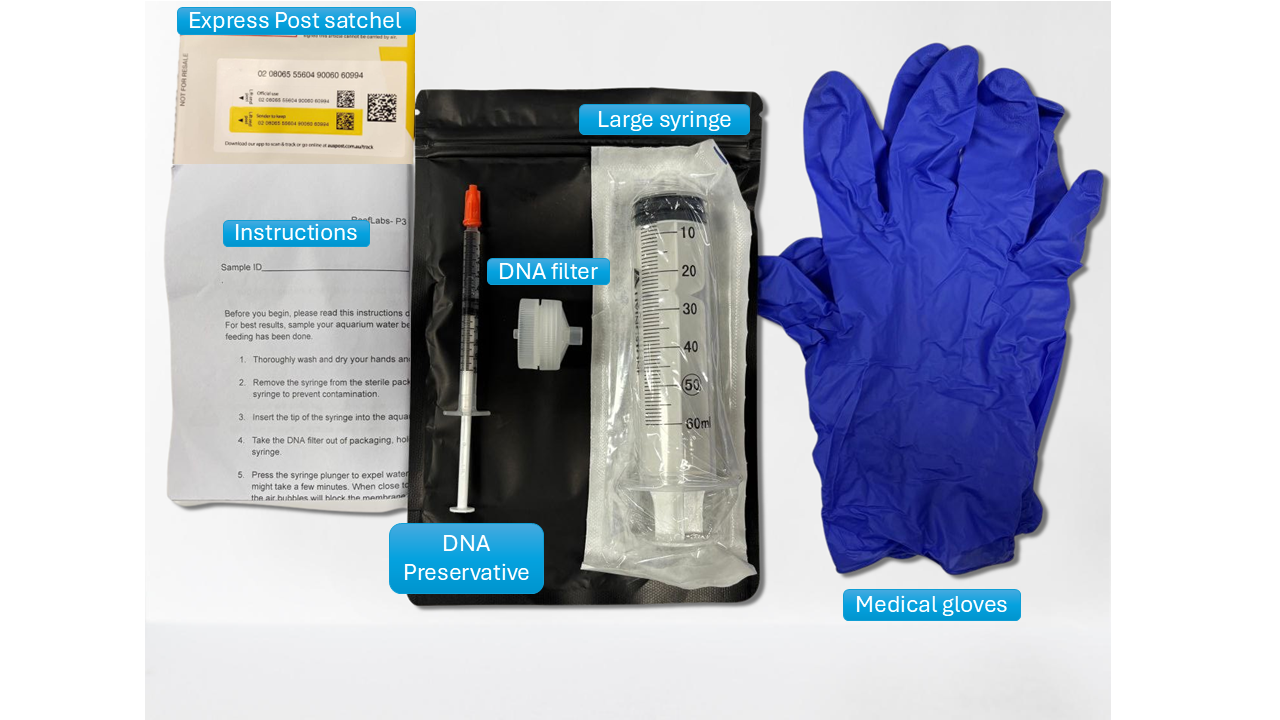
Your test kit arrives with everything you need
2
Collect Sample
Follow simple instructions to collect your sample
3
Ship Back
Use the prepaid label to send it back
4
We Analyze
Our lab analyzes your sample in detail
5
Get Results
Receive your comprehensive results report
What You'll Receive
Complete Test Kit
Everything you need to collect and send your sample
Express Return Shipping
Pre-paid express shipping satchel included
Comprehensive Analysis
Advanced laboratory testing of your aquarium microbiome
Custom Recommendations
Personalized advice based on your specific results
~3-4 weeks Turnaround
Results delivered within 20-30 days from when your sample arrives at our laboratory.
Detailed PDF Report
Your aquarium microbiome results & insights delivered directly to your email
